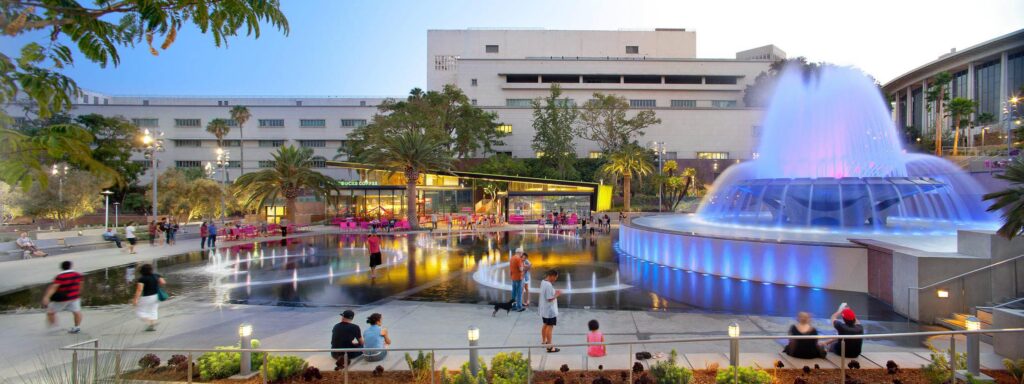
In the heart of Downtown Los Angeles, Gloria Molina Grand Park stands as a testament to the transformative power of arts and culture. Beyond its aesthetic appeal and role as a communal space, the park has become a catalyst for economic growth and revitalization. This case study delves into how investing in such cultural infrastructure can yield substantial economic benefits, using Gloria Molina Grand Park as a prime example.
Gloria Molina Grand Park, named after the late trailblazing politician Gloria Molina, is a sprawling 12-acre park that stretches from the Music Center on the west to City Hall on the east. Opened in 2012, the park was part of a larger initiative to rejuvenate Downtown Los Angeles, an area that had long struggled with economic stagnation and underutilization. I’ve been able to experience this park many times when I have presented at arts and placemaking conferences in Los Angeles, the park was often used for breaks that would entail interactive drum circles and cultural performances.
The park’s creation was a significant investment in arts and culture, aiming to provide a vibrant public space for residents and visitors alike. This investment has paid off handsomely, contributing to the area’s economic revitalization. Property values in the vicinity have surged, attracting new businesses and residents, and creating a ripple effect of economic activity.
One of the most immediate economic impacts of Gloria Molina Grand Park has been its ability to attract tourists. The park hosts numerous cultural events, festivals, concerts, and public art installations throughout the year, drawing visitors from across the city and beyond. These events generate significant revenue for local businesses, from restaurants and cafes to hotels and retail shops.
For instance, the annual Grand Park’s NYELA, a New Year’s Eve celebration, attracts thousands of attendees, providing a substantial boost to the local economy. According to the Los Angeles Tourism and Convention Board, such events contribute millions of dollars in economic activity each year, benefiting a wide array of local enterprises.
Investing in arts and culture through projects like Gloria Molina Grand Park also translates to job creation. The construction and ongoing maintenance of the park have created numerous jobs, from construction workers and landscapers to event organizers, vendors and small business owners and security personnel. Moreover, the influx of visitors and businesses has spurred additional employment opportunities in the hospitality, retail, and service sectors.
The park’s role as a cultural hub also promotes workforce development in the arts. It provides a platform for local artists, musicians, and performers to showcase their talents, gain exposure, and build their careers. This nurturing of local talent contributes to a vibrant creative economy, fostering innovation and attracting further investment in the arts.
Beyond direct economic benefits, investing in arts and culture enhances the overall quality of life, which indirectly stimulates economic growth. Gloria Molina Grand Park offers a green oasis in the urban landscape, improving mental and physical well-being for residents and visitors. Such amenities make the area more attractive to potential residents and businesses, driving demand for housing and commercial space.
Furthermore, the park serves as a communal gathering space that fosters social cohesion and community engagement. This social capital is invaluable, as a strong, connected community is more likely to collaborate on local initiatives, support local businesses, and contribute to the area’s economic vitality.
The case of Gloria Molina Grand Park in Downtown Los Angeles illustrates the multifaceted economic impact of investing in arts and culture. By revitalizing the area, attracting tourists, creating jobs, and enhancing quality of life, the park demonstrates how cultural investments can serve as powerful engines of economic growth. As cities worldwide grapple with economic challenges, the success of Grand Park offers a compelling argument for prioritizing arts and culture in urban development strategies. Investing in such initiatives not only enriches the cultural fabric of a city but also drives sustainable economic prosperity. Escondido’s Grape Day park has all the ingredients that make Grand Park successful, let’s invest in a cohesive vision that will bring a sustainable impact to the entire city.